What's Left Is Judgment
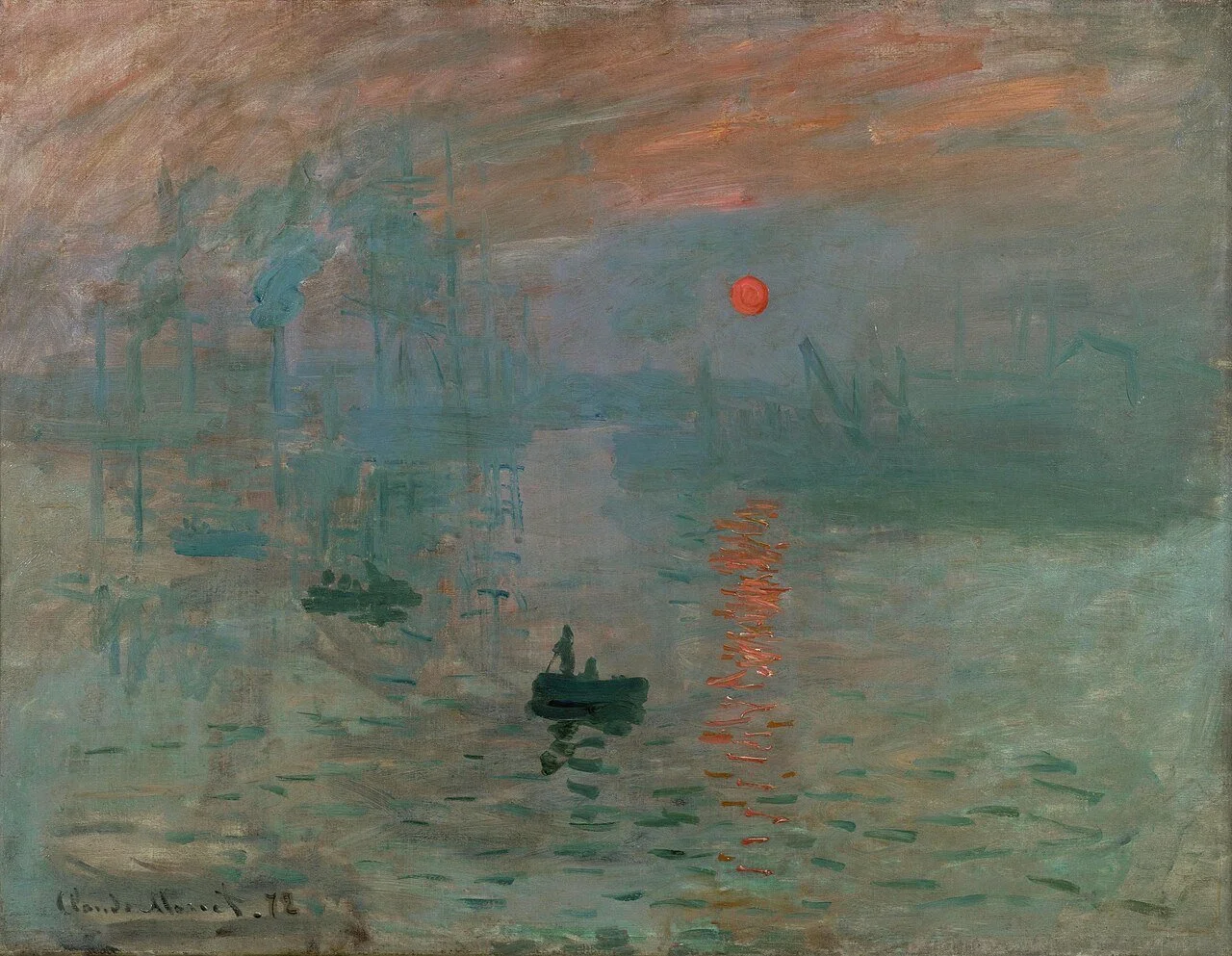
Photography didn't kill painting. It killed the job of painting things exactly as they looked.
That's what let Monet paint light instead of objects. Degas started cropping his compositions the way a photograph crops a frame, off-center, mid-motion, caught rather than composed. Cézanne started breaking objects down into their basic geometric forms, and that thinking fed directly into what Picasso and Braque built with Cubism. The camera took over representation, and painters were freed to ask what a picture could do that a photograph couldn't.
But it wasn't just the painters. The photographers pushed the new tool past what it was built for. Man Ray and Lee Miller were in a Paris darkroom in 1929 when a mistake, a light turned on too soon, partially exposed a set of negatives. Instead of tossing them, they looked at what the light had done and turned it into solarization, a technique that became core to their surrealist work.
The tool wasn't the interesting part in any of this (the solarization only happened because it went wrong). What Man Ray and Lee Miller had, and what Monet and Degas had before them, was the judgment to look at something unexpected and recognize it was worth keeping.
AI is doing the same thing to creative work, just faster.
It can generate a hundred versions of an ad in the time it used to take to brief one. Copy, images, video: execution is basically free. Which means execution stops being the differentiator. It never was the point, but it used to be table stakes, so nobody had to say it out loud.
What's left is judgment. Taste. Knowing which of the hundred versions is actually good, and why.
When I ran the creative team at Go Fish Digital, that started before AI ever touched an asset. We used it for research and discovery, but we paired that with real conversations: talking to actual people, understanding their frustrations, their motivations, what they want and what's stopping them. That's where we found the tension, the place where what people say and what they need don't quite line up. That tension is where the real insight lives.
Once we found it, that's what shaped the creative strategy, the messaging, the design, the direction we took a brand. AI helped us move faster once we knew what we were making. It couldn't tell us what was worth making.
That's the part that doesn't scale. It's also the part that was always the actual job.
An earlier version of this piece appeared on LinkedIn in 2026.
